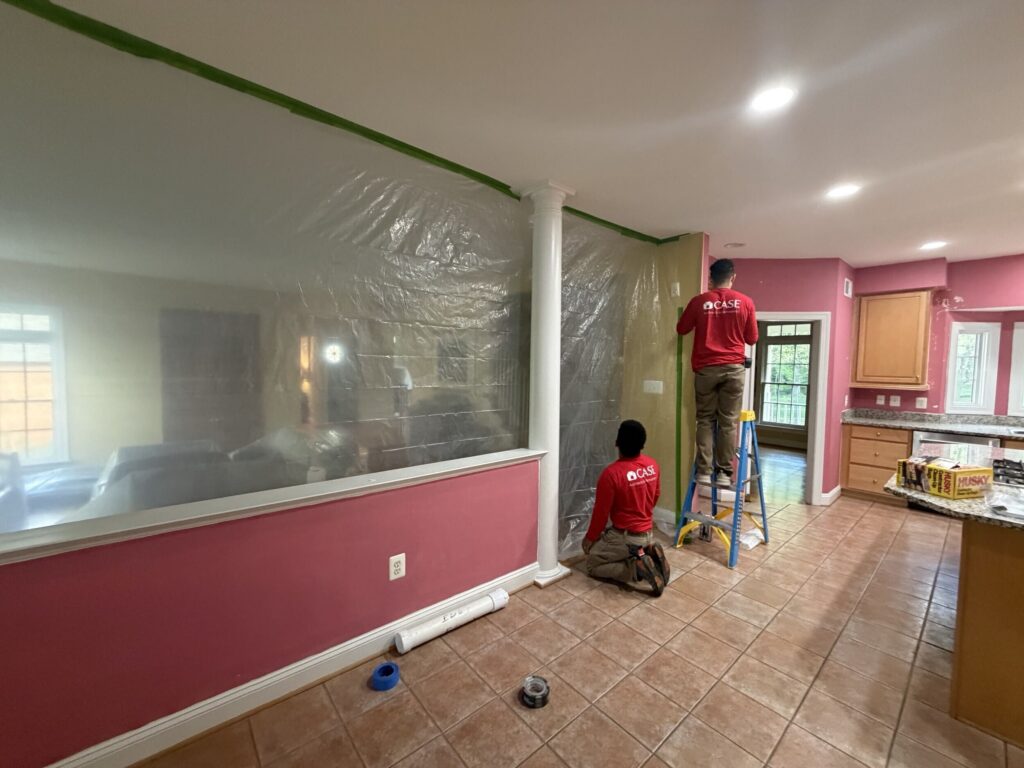
Just like the classic song by The Clash, “if I go there will be trouble—but if I stay it could be double” (at least in terms of daily inconvenience). Whether or not to live in your home during a remodel is a question that should be asked early in the planning process. Let’s compare a few pros and cons of living through a remodel so you can be ready to answer this important question.
Most Homeowners Stay Put
Choosing to remain in your home during remodeling can be the most practical and cost-effective choice. Most homeowners stay in their homes if feasible and safe. By staying put, you avoid the cost of short-term rentals or imposing on local family. Beyond the financial benefits, staying home maintains your daily rhythm with commutes, school busses, errands, etc. Some homeowners want to have a front row seat at the renovation, to learn more about their home and see the daily changes.
Staying Put with a Professional Team
The stay-at-home experience is dependent on your remodeling team’s practices and professionalism. At Case Architects & Remodelers, discussing your stay begins in the design and planning phase. This way we can adjust phasing of construction, and you can plan ahead.
Along with good planning, Case has several protocols that help reduce stress and dust:
- A Dedicated Project Manager: Your PM serves as your main point of contact during the construction phase. With weekly client meetings and a forecast, the PM allows you to understand who is going to be working in your home on what days.
- Preconstruction Meeting: Your PM and design team will join you for an in-person meeting a few weeks prior to the start of construction. The PM goes through a preconstruction checklist touching on furniture and personal belongings in work site, special considerations for pets, acceptable areas to store materials, and even your experiences with prior remodels.
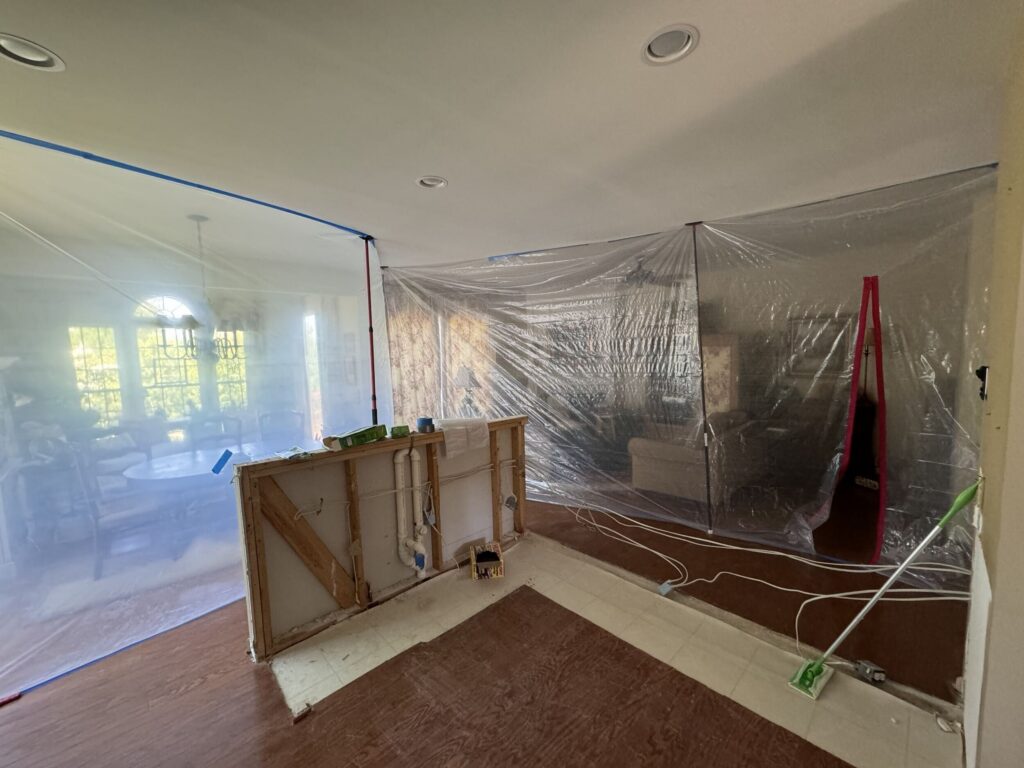
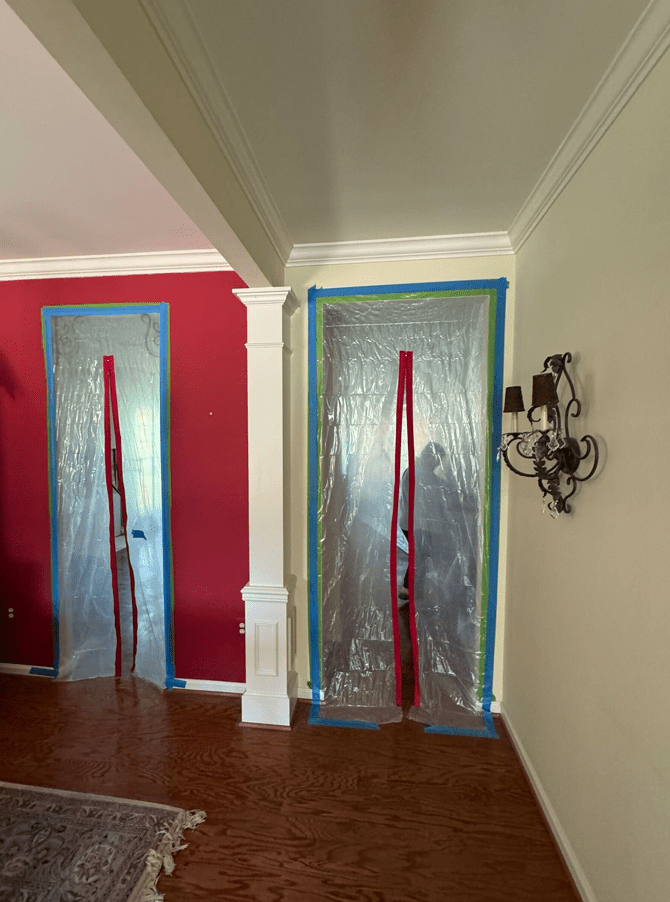
- Dust Mitigation: Case uses commercial-grade air scrubbers and floor to ceiling dust wall systems with zippered doors to reduce dust. Case is a lead certified firm, and practices lead safe construction and clean up methods as required by the EPA for homes built prior to 1978.
- Safety: Case’s craftsman and alliance teams make sure the jobsite is safe and the water, HVAC, and electrical systems are working at the end of each day. A lock box onsite is used to safely store house keys for craftsman and tradesmen. Family pet safety is always considered during planning and implemented on the jobsite.
The Case for Vacating
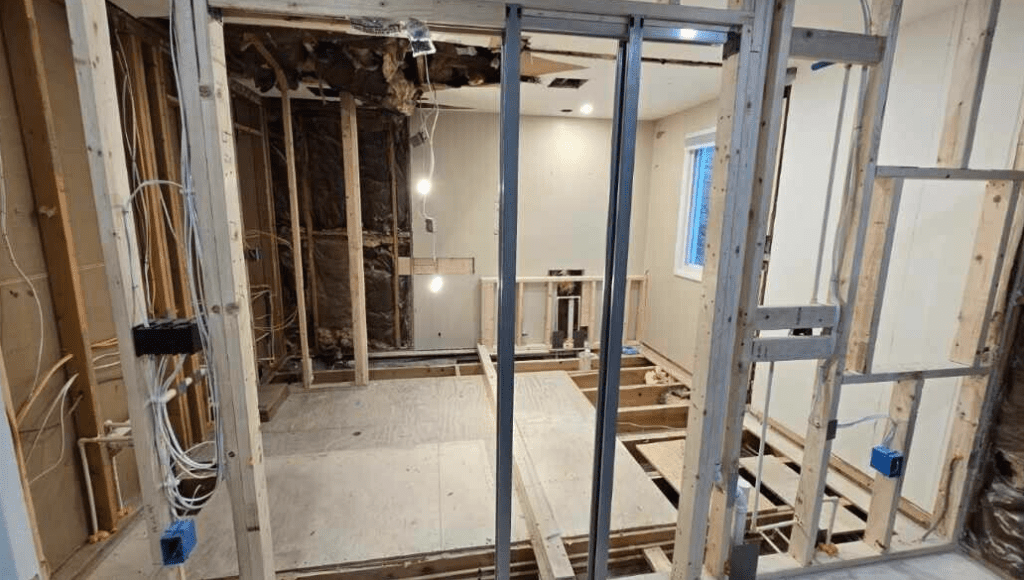
There are times when moving out is a logical choice or necessity. Adding a story or level to your home would be an example where safety requires moving out. A full-home remodel that touches all corners of the home is another project that points to moving out. The financial sting of a short-term rental, the social cost of imposing on nearby family, or changes in commutes are all downsides of moving out.
Then there is the invaluable peace of mind that comes with escaping the daily noise and inconvenience of a remodeling worksite. By relocating, you are ensuring your living environment is removed from the worksite stressors. Project Managers at Case post progress pictures to a client portal during the construction phase, which helps clients stay connected while away.
Moving out can increase the efficiency of the construction too, depending on the project. When a home is empty, trades like plumbers can work straight through the day without the ‘end-of-day reset’ required to get your water or power back on for the night.
Whether you choose to ride out the renovation at home or seek a temporary retreat, a well-planned strategy and a professional team ensure your project stays on track while minimizing the “trouble” to your daily life.