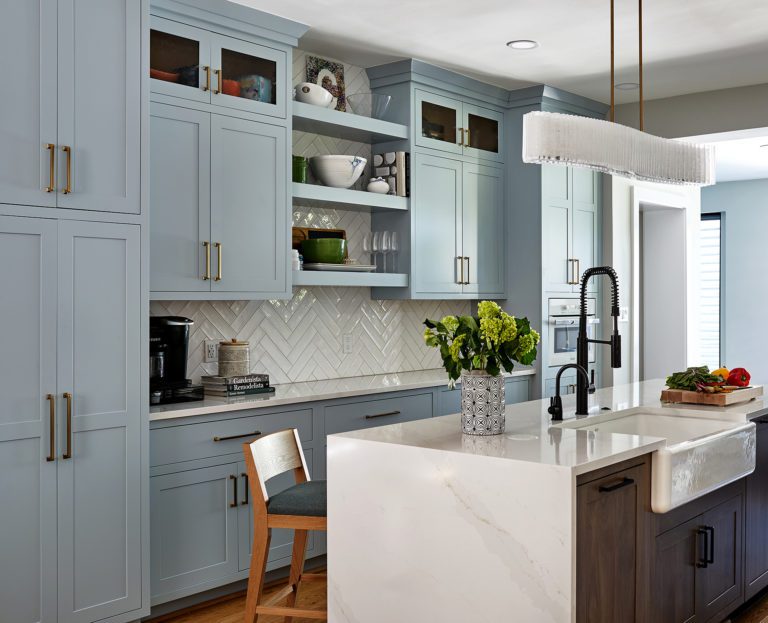
A little bit of greenery in the kitchen can go a long way and take the room in a whole new direction. And you’re not limited to growing culinary herbs on your kitchen windowsill, if your plant tastes happen to lie outside the edible arena. Kitchen by Case Design/Remodeling.
Culinary herbs and leafy greens are easy to grow, and dense root systems make them perfect for container gardening. An indoor window garden can accommodate a wide range of herbs throughout the year, while planters and containers just outside your kitchen door can be a substantial supplement for additional edible plants from spring to fall. Many homeowners choose to grow culinary herbs for convenience, and they also tend to be expensive items at the market that are relatively inexpensive to grow at home. The plants themselves are beautiful and add a wonderful aroma to the air. Design options are practically limitless, so unchain your imagination after gathering some inspiration from these kitchen garden window ideas and designs.Kitchen garden windows
Most culinary herbs like direct sunlight, but you don’t have to grow them all right in the window. Plants that get plenty of indirect light will do just as well, increasing your space and design options.
Image courtesy of Jennifer Ashton
This tiered, self-watering hanging planter from Plow & Hearth is a great space saver that makes it easy to rotate plants for cuttings and even sun exposure.
Perfect for a windowsill, countertop, or tabletop, these beveled herb pots from Made in Design are chic, portable, and easy to cut from.
This recessed countertop organizer is perfect spot for frequently used herbs, which help add pattern, texture, and color to the cooking station. Image courtesy of Bonfigli Design.
The planting troughs in this kitchen utilize wall space rather than countertops or windowsills, while supporting the rustic aesthetic of the open floor plan. Image courtesy of The Lettered Cottage.
With showy plants like culinary herbs, it’s easy to let the greenery steal the show, but in an eclectic kitchen the containers themselves can become an integral part of the design aesthetic. Image courtesy of Colleen Steixner.
Expanding your kitchen garden windows outdoors.
Ideally, a culinary garden is convenient to the kitchen so it can be accessed quickly to cut herbs and other edibles as needed. You don’t need a large outdoor garden space to grow culinary herbs and other produce. Any hardscaped area will do, even if it’s as small as an apartment balcony or patio. Around a home’s exterior, there are plenty of options for planter and container gardening, including upcycling ideas you can implement yourself.
A space saver like this tiered garden box helps bring more light and heat to the plants. The design is perfect for herbs, strawberries, lettuces, and overhanging plants. Image courtesy of Etsy.
This similarly designed idea repurposed old deck stairs and provides the growing space of a garden bed without any breaking ground. Image courtesy of Houzz.com.
These colorful plants dress up the brick wall and provide a ton of growing room, while taking up virtually no additional space. Image courtesy of Carolina Katz and Paula Nunez.
Keeping plants in containers can really help extend both your design options and the growing season for outdoor plants. The cement patio, black pots, and wood siding all increase both soil and air temperatures by several degrees. Image courtesy of Aloe Designs.
Many edible plants make colorful and attractive design accents. Kale, rainbow chard, arugula, mustards, lettuces, and most culinary herbs are all used in ornamental landscape design. Image courtesy of Glenna Partridge Landscape Design.
When your needs aren’t very high volume or you’re only cooking for one, a simple design like this one from Hayneedle can become the perfect kitchen herb garden indoors or out. 


Vaulted ceilings can waste a lot of space inside a home. This living room library makes use of some of that space while maintaining the open feeling of the room, by taking the bookshelves all the way to the ceiling. Image courtesy of
This similar home library design integrated the library into the great room. Custom shelf lighting brings attention to accent décor and makes the library wall less overwhelming. Image couretsy of
This modern living room mimics the feeling of a grand library along one wall, using every corner created by the unique angle of the roof. Image courtesy of
This large, open space at the end of a second-story hallway was remodeled into a sunny, inviting home library, rather than turning the space into a TV room or closed guest room. The shelving maintained the antique cottage look created by the architecture and wainscot walls. Image courtesy of
If your hallway is wide enough, consider converting one wall into a home library. Image courtesy of
This walk-in closet was converted to a book nook and reading room. A space like this one can hold a surprisingly large collection of books. Image courtesy of
This walk-in bedroom closet makes every inch of space accessible with a library-style ladder and would make a wonderful home library design. Image courtesy of
It makes sense to add a library inside a home office space. The cubby holes in this home library design maintain organization and a uniform aesthetic. Image courtesy of
These custom library shelves add privacy to the open floor plan and full take advantage of the space between levels. Image courtesy of
Staircase landings are commonly underused spaces in the home where there may be just enough room for shelving or a bookcase. These custom shelves utilize the space under the stairs as well, while the open stairs and glass wall keep this library in full view. Image courtesy of
A spiral staircase creates a beautiful custom book nook in the stairwell space. Image courtesy of
This tiny closet satisfies the need for reading material in the bathroom and support’s this powder room’s vertical-axis design theme. Image courtesy of
There’s often underutilized space found in a guest room. This custom design puts the home library where there’s extra space and integrates a small corner desk that doubles as a vanity, in order to work around the design dilemma created by the window. Image courtesy of
The industrial design of the vent hood in this
The copper vent hood is an eye-popper in this white kitchen by
Look for a range hood that’s about 6 inches wider than the stove top. Units should circulate a minimum of 300 cubic feet of air per minute (cfm) and a maximum of 1200 cfm. A lower cfm won’t have enough power for most kitchens, while more can ventilate too much air from the home and decrease the efficiency of your heating and cooling system.
The massive stove hood in this
This under cabinet stove hood leaves plenty of room for storage cabinets, a beautiful backsplash design, and even a custom kitchen stove mantel. Image courtesy of
The
This island hood uses a chimney to ventilate exhaust.
This space saving design of this downdraft hood keeps the room and the view open. Image courtesy of
The downdraft hood in this
This custom-built hood by
This aerodynamic design is commonly seen in wall mount and island hood styles. Image courtesy of
This distressed wood hood vent keeps with the industrial look of a modern kitchen without using characteristic stainless steel. Image courtesy of
This custom hood blends in with the rest of the cabinetry, allowing the woodwork to take the spotlight.
What type of range vent hood did you choose for your own kitchen remodel? Share the specs with our readers in the comments section below.
This
This simple display by
This holiday fireplace display by
This colorful display by
This same
The décor on this mantel matches the other holiday displays in the room as well as the space’s usual furnishings and color scheme, simply by sticking to classic gold, silver, and white. Like many of the decorative fireplaces in our examples, this one shows that a simple display can be beautiful and classy. Image courtesy of